"
The first graders can't get enough of your books!!
Best, Susan
"
Susan Koch, 2016 Vermont Teacher of the Year
Union School, Montpelier VT
"
Our K/1 class LOVES their Danny books! One friend asks, "When can we go to Danny's house?" Another friend says, "Danny, your knock-knock jokes are very funny! I hope you have a wonderful birthday!"
Thank you for all the joy you've shared with young readers everywhere!
Your friends at AES in Antrim, NH.
"
Mary Donovan, M.Ed., K / 1 Teacher from
Antrim Elementary School
"
Thank you very much! I have taught many kids over many years with Mia's books. I keep in touch with some of my former Reading Recovery students, who are now grown; and they always mention "Danny". (It's usually "Ohhh, Danny.") I am excited to have access to the e-books to introduce more students to Danny.
"
Sally Giannini from
Albuquerque Public Schools
"
I am such a fan of the books; my students and I get so much joy from the Danny books! I had no idea but through the posters, stickers, books, etc. Danny has inspired me to have a dog-themed classroom. No wonder I miss being there so much!
"
Jennifer Robinson from
Margaret Hedrick Elementary, CA
"
I received my prize package today (LitCon Raffle), and thank you so much! What a wonderful way to end my snow filled week.
"
Jessica Blakely, Reading Specialist from
Royerton Elementary School
"
Hello! I have attached a picture of myself with all my goodies! Love the Danny stuffy, books and tote bag!
"
Andrea Moon
"
I just received my prize box in the mail today and opened it with my students gathered around. WE were all shouting for joy when we saw Danny and Bee, new books to read, Valentines-just in time, and a chart showing all of the books written by Mia Colton!! Thank you so much!!!
"
Deb Klootwyk Title I Reading Specialist and
Reading Recovery Teacher from Moses Elementary
"
I have loved using your books for over a decade!!
"
Nicole Chase from
Minot Public Schools, ND
"
The engagement and excitement your books bring to my lessons is so powerful. It just captures kids and they are hooked.
"
Kathleen Butigian, Reading Teacher from
Cranberry Elementary School, Sarasota, FL
"
I love the Danny books, and I love my Danny socks!
"
Elizabeth Buckley from
King Elementary/Jefferson County Public Schools
"
I love the Danny books. I have a RR friend who has especially enjoyed the Danny books this school year. They are his favorite!
"
Michelle Branham, Reading Recovery Teacher from
Pomaria-Garmany Elementary School
"
My students love Danny!
"
Lori Bowman from
Saydel CSD
"
My students absolutely LOVE Danny and his friends. They know that when they read a Danny book, they get to take my Danny home with them.
"
Margaret Blanton from
Martin County Schools
"
Thank you for your entertaining books about Danny! My students love them and so do I!
"
Jessica Blakely, Reading Recovery Teacher from
Royerton Elementary School, Muncie, IN
"
Wonderful resources for my classroom!
"
Ryli Ball
Newark City Schools
"
I’m doing distance learning and need to get level sets for my k students to read at home. Please send your catalog. Thanks so much - huge fan!
"
Levett Fortier, Kindergarten Teacher
from San Francisco, CA
"
Dear Mia Coulton, When is Bee's birthday? How do you make your books? How old are you?
"
Elissa from Fernbrook Elementary School
in Maple Grove, MN
"
My extremely bright 2e daughter struggles with reading and has always required significant prompting and direct supervision in order to read for herself even though she devours audiobooks at the 4th and 5th grade level. She finds most early readers boring because they are so far below her spoken vocabulary and language level. We got a random Danny book put in our library request as a substitute. That began a summer of reading where we checked out every Danny book the library had and my daughter read them all, multiple times and regularly without prompting or supervision. The reading level was where she needed it to be, but the related content between books created a story world that held her more advanced interests. This helped her reading fluency drasticly improve over a short period of time. We are planning to move on to the Danny Chapter Books for her reading in the fall. Danny definitely played a huge part in improving her reading fluency. I would love to see even more advanced Danny chapter books.
"
Sarah
Reading Specialist, Woodside Elementary School District
"
My extremely bright 2e daughter struggles with reading and has always required significant prompting and direct supervision in order to read for herself even though she devours audiobooks at the 4th and 5th grade level. She finds most early readers boring because they are so far below her spoken vocabulary and language level. We got a random Danny book put in our library request as a substitute. That began a summer of reading where we checked out every Danny book the library had and my daughter read them all, multiple times and regularly without prompting or supervision. The reading level was where she needed it to be, but the related content between books created a story world that held her more advanced interests. This helped her reading fluency drasticly improve over a short period of time. We are planning to move on to the Danny Chapter Books for her reading in the fall. Danny definitely played a huge part in improving her reading fluency. I would love to see even more advanced Danny chapter books.
"
Sarah
from Ohio
"
The Danny books are my favorite and also the most requested books by my students! Thank you!
"
Karen Volinski
from Avon, CT
"
My kinders absolutely love Danny. It has been wonderful to be able to share the comic strip stories with them each week. Now, I've just set up an account on the digital reading platform. It will be great to share your amazing books with my kiddos!
"
Cynthia L. Campbell
from Russell Elementary School, Rumney, NH
"
Thank you so much for the digital Danny books !
Today one of my students chose to reread Five Danny Dogs. As he was opening the book in anticipation of reading, he said, "I just love this book!" What joy you have given to him in the time of struggle!
"
Tina Jenkins-Plummer, Reading Specialist
from Rice Elementary School
"
I first met you and your beloved Danny books at the Reading Recovery conference in Ohio last winter. The weather was horrific, and my colleague and I got stranded for three days on our drive home to Wisconsin. Danny and friends brought many smiles to our faces during those days as we planned how to use them with our shared students. I introduced the books to my first grade class last year and those kids still come back and ask about Danny or if I have any new Danny books.
And now... Danny is a source of PEACE and COMFORT to my dear students as we are separated with this pandemic.
"
Kris Lauer
"
Thank you so much for these resources! I love Danny. Happy birthday month, handsome guy!
"
Maria Bast
"
The downloads you've created are super helpful and I will share them far and wide.
"
Linda Beal, Reading Specialist
at New Franklin Elementary School, Portsmouth, NH
"
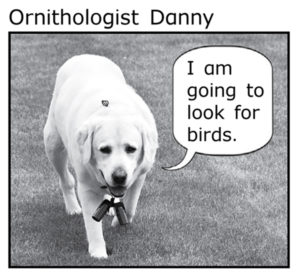
Thank you SO much for all of this but ESPECIALLY for the Ornithologist Danny story strip! I am a Reading Specialist and Reading Recovery teacher now doing it all online and this is just fantastic resource that I can use for individuals and groups so easily!
Thanks for your wonderful resources for all these years!
"
Suzanne Drysdale, M.Ed.
Reading Specialist Woodside Elementary School District
"
Dear Mia Coulton,
I have an idea for one of your Danny books. Danny, Norman and Bee go on a cruise ship but something goes very wrong!
Love Diesel
"
Diesel
from Lynnwood Elementary School, Schenectady, NY
"
These were among the MOST LOVED books in my collection when I was a reading recovery teacher -- just wanted to pop and say hello and thank you for providing books that engage so many young readers!!
"
Tish Rezac
"
Dear Mia,
First I want to thank you and your family for sharing your dogs with the world. The books are clever and cute and they reach so many children, even the most reluctant readers. I was introduced to the Danny books seven years ago when I started in my district. I fell in love with the books but didn't have many opportunities to use them with students at the time. This is my second year teaching Reading Recovery and during the last two years I have lived in your books. Danny, Bee and Norman are favorites among my students.
Enclosed you will find four letters from my current Reading Recovery students (Grant, Dempsey, Vivienne and Marco). It took them a couple of days to complete the letters, but they are so proud of their work.
"
Tresa Johnson
from Quarton Elementary School
"
Dear Danny, Mia, and Bee,
We love you. Our favorite book is "Spy Danny" because it's so funny. We like when Danny thinks one of the animals ate the flowers and the part where he and Bee get disguises. :-) We also like "Danny's Rocket." We actually bought the science book Danny is reading just because it's in your book. :-) We frequently quote the story in our house.
Thank you for making our family smile so much! We enjoy all of your books as bedtime stories.
"
The Wesseleys
from Fort Atkinson, WI
"
Dear Mia Coulton,
Thank you for making it fun to learn to read.
"
Lucas' teacher, Mrs. Karen
from Shelbyville, KY
"
Dear Danny,
Thank you for inspiring my daughter, Kate, to read. We love dogs so your books are perfect for her. We also enjoy how there is often something funny on the last page of most of your books. Hope you get lots of treats and snuggles.
"
Kate's mom, Andrea R.
in Sugar Land, TX
"
I love the Danny and Bee bag that the books I purchased at the Reading Recovery conference in Columbus were put in. My first thought when I saw it was, would she please size it down just a tad and sell them as bags for the kids to use taking their books, cut-up story, etc. back and forth in. The children love Danny, and they would be so excited to get a Danny bag for their books. The bags typically sold for such a purchase are just slightly small. I’d love a bag whose dimensions were at minimum, 10×12. 11×13-15 would probably be better. Please consider. I’d love to be your first customer.
"
Kay
Reading Recovery Teacher in Monroe, IN
"
We have loved every single one of Mia Coulton’s books we have read! From Danny and Norman to The Chickens and the Fox series, they are all great! We started reading them when my kids were babies and now my first grader can read them to her younger brothers and us! So happy to have found these wonderful books!
"
Adelyn, Sean, and Oliver John's mom
"
Your books have been such a source of JOY for my entire class this year - Danny was the focus of many letters written to me during our opinion writing/character traits piece “which book character would be a best friend for you?”
And now... Danny is a source of PEACE and COMFORT to my dear students as we are separated with this pandemic.
"
Kris Lauer
"
We received your package yesterday! For Halloween my son (1st Grade) traded in large candy stash for some money. With his money he bought Bee & Danny. I wish you could have seen his eyes when he spotted the package yesterday! He was so excited to open the box and to start playing with Danny & Bee!
Can’t wait to see what adventures they go on together!
"
Jo Bingham
from Dayton, MN
"
I'm not sure any of my other Reading Recovery students will get to read my fabulous Danny books this round! Thank you for helping my students to learn to love reading!
"
Sara Fox, Reading Recovery® Teacher
from Franklin Monroe Elementary School
"
Hello!! I'm a Reading Recovery teacher who has shared my love of Danny & Abby with my 2 daughters! We recently ordered Danny and Abby for our house and I wanted to share this pic! My girls dress them up, read to them and take them on walks!! Thanks so much for helping me spread the love of reading with so many students over the years!! ❤️
"
Missy Kanizer, Reading Recovery® Teacher and Mom
"
Dear Mia Coulton,
How many Danny books have you written? Why don't we see dad's face?
"
Lilly,
Round Elementary School, Hartland, MI
"
Dear Danny,
Can you write a book about Avengers Infinity Wars? All his friends could dress up. If Spike learned his lesson, he can be Iron Man. Abby can be Black Widow, and you can be Thanos. Thanos is the winner. Bee can be War Machine because he is brave and can fly. Thank you for listening!
Your friend, Matthew
"
Matthew,
Decatur, IL
"
I have been a reading teacher for 27 years, and I have never found a character or a series of books that alights the imaginations of my students like the Danny books. I was lucky enough to discover them last year, and the kids were so excited about each new Danny adventure that I shared with the class. Even better, there were so many Danny books that emergent readers could read with success. My students got a great deal of enjoyment out of reading about Danny, writing stories about him, and drawing pictures of Danny and all of his friends. Their enthusiasm for the stories has inspired me to dedicate a portion of my classroom as “Danny’s Reading Corner,” which will feature every Danny book I can get my hands on and stuffed versions of Danny and his friends for students to read to. Thank you MaryRuth books for providing these fabulous, sweet, engaging stories. There are such a wonderful way to help foster a lifelong love of reading!
"
Jennifer Robinson, First Grade Teacher
El Centro, CA
"
I love you Danny. Hi Danny. I love your book Danny so much. I can't believe I am sending a letter to you. I am so excited. I love you. I want you to be my pet. To Danny from Annalena.
"
Annalena,
Van Buren, AR
"
Dear Ms. Coulton,
My Reading Recovery student, Melissa, loved reading the books in The Chickens and the Fox series. After reading them all, while waiting (hopefully) for additional titles, Melissa decided to write her own book featuring these characters. As you can see, she was influenced by your craft and sees herself, not only as a reader, but also an author! Thank you for inspiring many of our young readers and writers. I hope you enjoy The Sneaky Fox.
"
Lisa Kalmanash, Reading Recovery® Teacher
at Bowers Elementary School, Santa Clara, CA
"
Dear Danny,
I always read your books. I hope you write back.
From,
Adelyn
"
Adelyn,
New Berlin Elementary School, New Berlin, IL
"
I was a RR teacher before retiring eight years ago. I bought many Danny books and moved them all with me when I retired. Since then, I have read the books with a neighbor boy and used them when I volunteered at a nearby school. Bee was always a favorite in my classroom and in retirement.
Now I have two grandsons who also love Bee. Alistair is not yet two, but could identify which books had Dad as a character. He also pointed and said NO while reading BEE: THE BEGINNING. And he also exclaimed OH NO before I could turn the page showing Bee covered in mud. When we FaceTime with Al, he always requests to see Bee (the stuffed guy) before saying hello to us.
Our younger grandson Charlie lives nearby and just turned one. Bee goes on every stroller ride and car ride. Charlie's favorite Danny book is DANNY LIKES RED. The apple page cracks him up every time.
When I taught I loved Danny books, my students liked the books and so did their parents. Now I can share the joy with my little guys. Thanks for such lovely books.
"
Ann Mulvey
"
My student Lilly has fallen in love with Danny books this year! She has learned to read with expression and laughs at all the funny parts of your books. Thanks for making kids "want" to read. Attached is a picture of Lilly and our school therapy dog, Wrangler.
"
Kristin Raap, Reading Recovery® Teacher
Round Elementary School, Hartland, MI
"
Dear Danny and Mia,
Thank you for sharing Danny and his friends with us. We enjoy hearing about his adventures. We use the themes throughout our year to help us learn and celebrate our year in first grade. We hope that you are all doing well.
"
Mrs. Feldick’s First Graders
Fernbrook Elementary School, Maple Grove, MN
"
Dear Danny,
Which is your favorite Geologist, Botanist, Entomologist Ornithologist? My favorite is Ornithologist Danny! I like your goggles. Will you still not look at a spider? I love that you took Grandma Ruths glasses!!!
Love Branson
Happy Birthday Danny.
"
Branson, Clapton Elementary School
from Powell, TN
"
I believe the MaryRuth books are appealing to young readers largely because of their size, color, font, pictures/photographs, etc. The font and spacing are perfect. The vivid photographs on every 2-page spread break up the text. Danny, Abby, and Norman are loveable characters for young children and the fact that they are real is often surprising and exciting to students.
"
Amy Leirness,
Reading Intervention Teacher
"
Thank you so much for everything! The Danny books have truly transformed our library and have our students loving to read! I am inserting a link to a birthday book the students made using Book Creator. We celebrated Danny's birthday here in the library so the book shows you pictures of the party as well as all our birthday wishes for Danny. This is our second year with the Danny books and we love them. The students love the Danny bookmarks too!
"
Trish Bertelsen,
Monmouth, IL
"
Dear Mia and Danny,
Havic was one of my Reading Recovery kids last year. This year he is in a Booster Group. I so wish you could see the joy on his face when he gets one of your books. He is doing well and I am very proud of him! If you could please write him back. It would make his day! Thanks for all you do!
- He wrote this letter at home last night. :-)
"
Carla Hamilton, Reading Recovery® Teacher
Van Buren, AR
"
Dear Mia Coulton and Danny,
My students absolutely love the Danny Books. This year I received an email about Danny’s Birthday. When I shared this news with my students, they were so excited to write to Danny. My current Reading Recovery students wrote letters to Danny. They also included a photo and a drawing. We hope you like our letters as much as we enjoy your books. One question the kids have is how old is Danny? Please tell Danny we hope he had a wonderful Happy Birthday. Say hi to Bee and Norman too.
"
Joy Tamburino, Reading Recovery® and AIS Teacher
Sousa Elementary School, Port Washington, NY
"
Dear Mia,
This is what I think Dad looks like.
Love Sylvie
"
Sylvie
from Oakland, CA
"
The attached from Melissa is from our writing in a Reading Recovery lesson today.
"
Lisa Kalmanash, Reading Recovery® Teacher
from SantaClara, CA
"
On April 18th the Reading Recovery Teachers of Jackson ISD in Michigan, under the leadership of Maeghan McCormick, met for our monthly meeting. We celebrated Danny’s Birthday. We thought you might enjoy our group photo with Danny and Bee. Thank you for all your wonderful stories. The children love them and we do also.
"
Sally Coughlin
from Jackson Independent School District, MI
"
Dear Danny,
I hope you have a good birthday. I love your books. My favorite is Danny’s Shadow.
Love, James
"
James from Sousa School
in Port Washington, NY
"
If I remember correctly, Mia was trained in Reading Recovery. I was a Reading Recovery Teacher Leader for many years and perhaps that is why her books resonate so much. There are so few companies that truly understand how to consider font, print layout, sight words, picture support, sentence structure and engage readers the way your books do. We did a complete overhaul of our classroom libraries about 10 years ago and we have nearly all your books across our K-2 as part of our libraries and all your characters are like family members to our students. Whatever we can do to keep the students' literacy on track while connecting with their favorite characters during remote learning will be a win/win.
Thank you for all you do!
"
Linda Beal, Reading Specialist
from Portsmouth, NH
"
Hello! I would love to sign up for your newsletter etc. I am a preschool teacher and a mom to a 4 and 5 year old who LOVE Danny and Norman! We just recently bought 6 books and have read them ten times each at the least. Thank you so much for helping instill a love of reading in children.
"
Rebecca J. Thompson, Preschool Teacher
from Vermilion, OH
"
Dear Danny,
We hope you had the happiest of birthdays. We wanted you to know that we were thinking of you in Nova Scotia. We used your “ find a word “ sheet to celebrate your special day. We took a picture of Bee and Super Danny home to colour!
Many more!
"
Chester District Elementary School
in Nova Scotia, Canada
"
Letters to Danny written by 2nd grade Title I students at St. Patrick School in Terre Haute, IN.
Danny books voted #1!!
"
Missy Kanizer, Title I Teacher, St. Patrick School
in Terre Haute, IN
"
Dear Danny,
I love your books. My favorite is Get Down Danny. I love Danny.
From Sammy
"
Sammy from Sousa School
in Port Washington, NY
"
I have a special needs student who just loves the Danny books. He loves to read the books to Bee. Some days that is the only way I can get him to read either to me or by himself.
Thank you for providing such wonderful books for our lower readers and also those who just love to read about Danny, Norman, Abby, and Bee and all of their adventures. The chapter books have been a great addition to my classroom library.
Happy Birthday, Danny!
"
Karen Glover, Second Grade Educator
at North Creek Elementary School, MI
"
Lily is almost 8 and LOVES reading to her brother, Henry, who is not yet 2. Favorite books are all the Danny books. Henry even sleeps with Danny every night!
Thank you again for the books!
"
Danielle,
Lily and Henry’s mom
"
HI - I just wanted you to know that a series of "Danny" books has been donated to Oak Marr RECenter in Oakton, Va (outside of Washington D.C.). We are going to use them in our child care center. They are just adorable!
"
Julie Bond (via Twitter)
"
To Danny from Kellan
Dear Danny
I love your books a lot. So far my favorite book is Danny’s Rocket. I cannot wait to read one of your other books.
"
Kellan
from St. Patrick School, Terre Haute, IN
"
Dear Danny,
My name is Jacob. I read your books, and I love them so much. You and Bee are my favorite characters. When I read Danny’s Bee Goes to the Hospital Bee’s eye fell out and he got ripped in the middle. What did Norman do to make Bee go to the toy hospital? I think he played with him too hard.
Sincerely,
Jacob
"
Jacob,
Nelson County Schools, KY
"
Dear Danny and MaryRuth Books,
Thank you for making my Reading Recovery students fall in love with reading! If it were up to them, they’d only choose Danny books. They also love getting on Facebook to see new pictures and videos. Danny, Norman, Bee and Abby have played a big part in inspiring my young readers to become lifelong readers. For this, I am forever grateful.
"
Michelle Simpson, Reading Recovery® Teacher
at Cox's Creek Elementary School, KY
"
Dear Danny,
I love all of your books. You are the best dog ever!
Your friend,
Eric
"
Eric,
Meadowcreek Elementary School, Norcross, GA
"
The kids at Westwood and Lindsey schools are enjoying the books immensely. They love the stories, yes, but also love arranging and rearranging the books by color, stacking them up, etc.
"
Diane Gasdick
in Chesterland, OH
"
Dear Danny
My name is Isaac. I am in grade two. I go to St. Patrick School. I have two brothers. I like to read. I like to ride my bike. My favorite book is Danny Gets Fit because you can do it to get fit too. What type of dog are you?
"
Isaac, Grade 2
at St. Patrick School, Terre Haute, IN
"
When I learned we would not return to school, I ordered some Danny chapter books and the sticker set. I received them so quickly and I have been reading a chapter of “All My Friends” every few days and posting it on our grade level Facebook page. My students are smiling, parents are commenting how much their children love Danny and can't wait for the next chapter...these books are keeping us close in heart during this scary time.
Please accept my very heartfelt THANK YOU for sharing your loveable dog, your experiences and your talents to make the world a better place for children (and teachers).
"
Kris Lauer
"
Dear Danny,
My name is Reagan. I go to St. Patrick School. I love to read Danny Books. I like summer. I am in 2nd grade. I like to ride my bike. My favorite book is Moving. How old are you? What is your favorite Danny Book? What is your favorite color?
"
Reagan
from St. Patrick School, Terre Haute, IN
"
Dear Mia Coulton, I wrote a Danny book. I like your books. What does he eat?
Love Kiyah
"
Kiyah,
Clear Creek Elementary School, KY
"
The kids love them and the books have turned them into READERS!
"
Mary Pelley
in Trumbull, CT
"
Dear Mia Coulton,
Briecyn has fallen in love with Danny within the first five Roaming Around the Known lessons in Reading Recovery. He is eager to read (and read again) any Danny book.
He wanted to send a letter to Danny, which is enclosed.
"
Teresa Fruth, Reading Recovery Teacher Leader
at Mansfield City Schools, Mansfield, OH
"
Dear Danny,
I like your book Danny Likes Apples. I like apples too.
From Mateo
"
Mateo,
Jackson Elementary School, Lawrenceville, GA
"
Dear Mia Coulton,
Thank you for writing Danny books. Is Danny sleeping in Dad's bed?
Love Jeramian
"
Jeramian,
1st grade student at Gwinnett County Public Schools
"
Dear Danny,
My name is Miguel and I love Danny. Here is your friend the bee. What do you play with Bee? We like to read.
"
Miguel,
1st grade student from Arcado Elementary School
"
Dear Danny,
You were so cute as a puppy even if we don't know which one you are. You are kind to other dogs and people. Danny, thank you for being a kind dog!
Lilia
"
Lilia,
Freeman’s Mill Elementary School, Lawrenceville, GA
Phoebe,
1st grade student at Gwinnett County Public Schools
"
Dear Danny, I will give you a surprise if you are good! Love Bridget
"
Bridget,
Student in Mrs. Warren's class, Dacula, GA
"
Danny, I like your books. Can you send more books to Ms. Moore? Thank you from -Chase.
"
Chase,
Student in Ms. Moore's class, Dacula, GA
"
Norman and Danny Thank you
"
Alina
"
It was so nice to visit your booth again at the International Literacy Association conference in Austin. I was mad at myself because I had forgotten to pack my Danny socks! I have used your books for several years. They remain a favorite choice of my students, too! Thank you for your work.
"
Nancy Wright, Instructional Coach
in Glenwood, IA
"
Mia Coulton connects with kids like no other author.
"
Judy Kettle, Reading Coach
Ottawa USD 290, KS
"
I can’t wait to read another Danny book!!
"
Dawson,
Cox’s Creek Elementary School, KY
Ella, 6 Years Old,
from Bainbridge County, OH
"
Thanks so much for helping my students fall in love with reading. All of my Reading Recovery students love Danny, Bee, Norman and Abby. We visit your Facebook page often!!
"
Michelle Simpson, RTI Teacher
at Nelson County School District, KY
"
My first grade Title I groups adore Danny books like I do. They were excited to let you know.
"
Joan Spatz,
at Main Elementary School, Beavercreek, OH
"
I love your books. My favorite one is Danny and Abby Play Hospital. They don’t fight over stuff. How do you get so many books done in so little time? I like your books so much I want to be a book author just like you.
"
Serena, 1st Grader,
from McHarg Elementary School, Redford, VA
"
You should make a movie of Danny. I love your Knock Knock Joke Book. You should make the movie about Danny finding Abby and got distracted and chased a squirrel.
"
Marianne, 1st Grader,
from Main Elementary School, Beavercreek, OH
"
Dear Danny, My favorite book is when you tried to find Abby. And you found her!
"
Chase, Reading Recovery Student,
at Fawn Area Elementary School
"
Dear Danny, I like all your books. It was funny that you ate all your Dad’s food at the picnic.
"
Ayrton,
Lewis Elementary School, Solon, OH
"
"Thank you Danny! Today, after 6 mo of support and hard work. I read my first full sentence in Snow Danny! I love your books. I love Danny." From Chandler, age 7
(From Chandler's mom: Sensory Disability has kept his eyes from seeing text. He has worked so hard... you have helped! Thank you.)
"
Chandler, age 7
from Evergreen Elementary School, WA
"
Dear Danny,
What do you do all day? I read the book SPY DANNY. How do you smell the flowers? What’s your favorite treat to eat? My favorite thing to eat is fruit snacks.
Love, Jaylen
"
Jaylen, Meadowcreek Elementary School
in Norcross, GA
"
The variety of Danny stuffed animals are wonderful! Students will enjoy seeing Danny on my shelf and snuggling with the toy! The posters are also very cute. Perhaps some posters that highlight MaryRuth’s nonfiction text would be a good idea.
"
Peggy, Reading Specialist,
at Middleton Elementary School
"
Dear Danny,
Your book was funny and red.
Love Jaylen
"
Jaylen,
1st grade student from Gwinnett County Public Schools
"
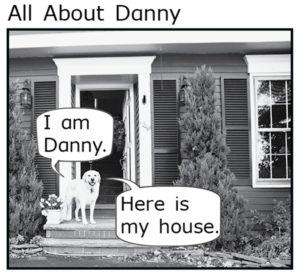
I use easy Danny books for beginner readers because they have some simple high frequency words with supportive pictures and they follow a predictable sentence structure which is good for all beginner students and especially good for EL students: Look at Danny, I Am Danny, All About Danny, Get Down Danny, Danny's Window, Grandma Ruth's Glasses.
"
Reading Recovery Teacher Leader,
at South Washington County Schools
"
I love Danny’s books. I wish that you could make more. Please make more. Pretty please? I am going to get a cat.
"
Dakota, 1st Grader,
at Main Elementary School, Beavercreek, OH
"
Dear Danny, I love the stories about you! My favorite book so far is Bats in Danny's House. I thought it was funny when Bat-Bee was chasing the bat out the door. The bat was like, ”See ya! I’m not coming back to your house again with Bat-Bee around.“ How was Bee actually flying?
"
Dawson,
from Cox’s Creek Elementary School, KY
"
My students love All About Danny, Super Danny, Look at Danny, Danny Likes Red...They seem to like the photographs as opposed to drawings. In Danny Likes Red, I like that the pattern changes a bit and they have to monitor with known words. I use these books because of the predictable pattern, picture support, building on known words and clean lay-out on the page. My students enjoy getting to know a character and reading books at increasing levels about that character.
"
Karen,
Reading and EL Teacher
"
Dear Danny,
I like reading Danny books because I like dogs.
Love Phoebe
"
Phoebe,
1st grade reader, Dacula, GA
"
I really like the use of photographs in the Mary Ruth books. I think the photographs capture nature and the character realistically and kids need more books that do.
"
Kitty Pageler, Reading Specialist/Interventionist,
at Royal Oaks Elementary School
"
The “Danny” series are a favorite among my students. I think it’s the real-life character of Danny and reading about the silly things Danny can do that is so motivating to them. Many of my students have a pet, so they can make connections to this character.
"
Sara Torgusson,
Reading Recovery Teacher
"
My students love animal characters. They especially love Danny because he reminds them of their dog, their friend's dog, a dog that they might have in their lives. I also love the series books, the books with characters the students find entertaining. We love to read about Danny & Bee.
"
Traci Newhouse, Elementary Literacy Specialist,
at Pullman Elementary School
"
Dear Danny, It’s fun to read your books and I like your toy, Bee. When is your birthday?
"
Bella,
Waynesburg Central Elementary School, Waynesburg, PA
"
Dear Danny, I love your books. My favorite book of yours is Super Danny and Bat-Bee. My favorite chapter in Super Danny and Bat-Bee is the Groundhog because Bee got punched out of a hole. I wonder how you tell the author what you want to write back to me. Maybe you use paw signals.
"
Jaden,
from Kinard Elementary School, Clover, SC
"
I am always in need of more books that are accurately leveled and interesting to kids! I love the Danny series! He goes through things that kids can relate to! I also love that he has a chapter book, so kids could follow him for quite a while!
"
Rachael Marrier,
Valley Crossing Elementary School, Woodbury, MN
"
One of my students was shocked today to discover he is now reading 2nd grade books. He thinks reading Danny books is part of the reason he can! He wanted me to send this to you. Thanks and enjoy!
"
Ms. Hoppes,
Highland Primary School, Highland, IL
"
I like that Mary Ruth is consistent in its use of font, style, and size. Students can easily transition from one book to another because they are so similar in style.
"
Linnea Gamache, Reading Specialist,
at South Washington County Schools
"
I liked the book when you were sorting your treats. At the end I liked when you said your treats were all gone.
"
Morgan,
from Fawn Grove, PA
"
My name is Tyler and I like to ride my bike. How do you write? You can’t hold a pen. Please tell me how do you write.
"
Tyler,
from Webster, NY
"
I love your Danny books.
"
Ashley,
at Wright Elementary School, Shelbyville, KY
"
I like all of your books. Some of them are kind of funny and I really like dogs.
"
Matthew,
from Fawn Area Elementary School, Fawn Grove, PA
"
I have a Reading Recovery student who has a poor home life, but his attitude for learning and reading is amazing!! He loves reading Danny. When I asked him why he likes Danny he said because he’s so funny, and cute and he's a dog!! Thanks so much for writing books to encourage young readers to love to read! Blessings!
"
Melissa,
Reading Recovery Teacher, TN
"
I want you to live closer so that I can visit. We could write books together. I love you.
"
Johanna,
at Tega Cay Elementary School, Tega Cay, SC
"
Thank you so much for all you do for the kids. I am enclosing a letter from a student I teach at Springfield Elementary School. (The student) is learning so much and has fallen in love with Danny and wanted to send him a letter.
Thanks so much.
"
Jenny Willis, Reading Recovery Teacher Leader,
at Effingham County Schools
"
Can you show me the inside of Danny’s castle? Your biggest fan.
"
Kaden,
Grade 1, Suzanne M Smith Elementary School, ME
"
My favorite book is Danny the Dinosaur. I like it because it made me smile. Is Danny real? I love reading to my dog.
"
Jackson
Kierra,
Grand Oaks Elementary School, Clinton, TN
"
I love your books. I wrote my own book about Danny. I hope you like it. Danny is my favorite in the world. My name is Jackson. Good bye!!!!
"
Jackson,
Waynesburg Central Elementary School, PA
"
I want a part two of Danny’s Rocket. Here is why: it will be good for our brains. And the reason is alot of people like Danny books. Most importantly we will know if Danny goes to the moon. This is why I want another series of Danny’s Rocket books.
"
Jack,
First grader, Rowe School, Yarmouth, ME
"
How old are you? Which Danny books do you like the most of all? I love to read your Danny books and I like the Danny books.
"
Jacob,
Hayward Elementary School, Sioux Falls, SD
"
I like Danny books. My favorite book (Groundhog Day)
"
Ethan,
Wright Elementary School, Shelbyville, KY
"
When is Danny’s birthday? Where did you get Bee? Do you take your pictures first or do you write first? In Super Danny and Bat-Bee whose cat is that?
"
Edgar,
Hayward Elementary School, Sioux Falls, SD
"
Your books are great to read. Are you a real dog? My favorite book is Danny and Bee Play Together.
"
Carbon,
Silas Willard, SC
"
Danny is my favorite character.Does he like to have his picture taken? How old is Danny?How old is Bee? What is your favorite book? "Norman Lost a Tooth" is my favorite book. It was funny that his tooth fell out when he chewed his toy. How many books have you written? I have read at least 20! I hope you keep writing books about Norman and Danny.
"
Angel,
Lake Forest. IL
"
I like Danny books. But where is Daddy’s head? Thanks.
"
Aaron,
San Francisco, CA
"
I like the book Danny Gets Fit. My favorite part is when Danny said, “Do I have to do that again?” Danny is so tired out. I think Danny should do push-ups to get fit. Norman, Danny, and Abby are all best friends. I like the rest of the books too.
"
Curry,
Logan-Springfield Elementary School, York, PA
"
I read your books almost every day because I love them.
"
Alden,
Shelbyville, IN
"
You are hilarious! I like Danny’s Castle book the best. Why isn’t Dad’s face in the pictures? I wish there were cats in your books.
"
Ava,
Nova Scotia, Canada
"
We had not seen these books since I was five and there they were. It brought back such good memories seeing these books. So I just wanted to thank you for being such a good dog!
"
Guin,
Painesville, OH
"
Rocco is obsessed with the Danny books. They have been the shift he needed to reach success. Thank you!
"
Ann, Reading Recovery Teacher,
South Prairie Elementary School, Grimes, IA
"
Thank you for your funny books. You both are the best dogs in the world.
"
Khamden,
St. Peters, MO
"
Are you still making Danny books? How old is Danny? I love your books. Do you have any other pets?
"
Hailey,
Hayward Elementary School, Sioux Falls, SD
"
Did you get to play with the bunny? I like your books. Get Down Danny is my favorite.
"
Santana,
Riverside Elementary School, Sioux City, IA
"
We have Danny and Bee doll. I like when Danny is up on Dad’s knees. Is Bee real or not?
"
Amira,
First Grader, Canada
"
We dedicated our door to you and your books in the Month of March this year. When we polled our Reading Recovery and Title I students, you were the unanimous favorite for best author!
"
Holly and Melissa,
Genesee School District. MI
"
How are you Danny? My name is Conner. My favorite book is Super Danny. What is your favorite toy to play with? Please come to my house, Danny. I love you, Danny.
"
Conner
"
My tooth hurts. Norman had a loose tooth because he was chewing his big blue ball. I love Danny and Abby and Norman. Where do you write your books at? My dog Bursa likes to get on my Dad’s lap like Danny.
"
Bella
"
I want to let you know that your books are beloved by every child who reads them. Even our teachers with young children at home have grown addicted to Danny stories. They borrow them from our collections and some have even purchased them to have at home.
"
Haas Elementary School
"
I use easy Danny books for beginner readers because they have some simple high frequency words with supportive pictures and they follow a predictable sentence structure which is good for all beginner students and especially good for EL students: Look at Danny, I Am Danny, All About Danny, Get Down Danny, Danny's Window, Grandma Ruth's Glasses.
"
Kery Reardon,
Reading Recovery Teacher
"
How do you stick Bee on the rocket in Danny’s Rocket? I think it is funny.
"
Bowen, Reading Recovery Student,
W.G. Mallett School, Farmington, ME
"
I really like the use of photographs in the Mary Ruth books. I think the photographs capture nature and the character realistically and kids need more books that do.
"
Kitty Pageler,
Reading Specialist/Interventionist
"
The “Danny” series are a favorite among my students. I think it’s the real-life character of Danny and reading about the silly things Danny can do that is so motivating to them. Many of my students have a pet, so they can make connections to this character.
"
Sara Torgusson,
Reading Recovery Teacher
"
The look of the Mary Ruth books is very engaging to students. The books have real pictures with lots of bright fun colors. The book size is nice for our small 1st grade hands. The ongoing characters lead the reader to enjoy the next book and make connections from the prior reads.
"
Cheryl Thompson,
Reading Recovery Teacher
"
I LOVE that the layout of your books is not too busy, and the pictures are colorful and not too distracting.
"
Laura Mueller,
Reading Recovery Teacher, MN
"
Love the real life pictures of Danny. Kids relate to dogs and events that really happen. Font is big enough for early readers. Pictures go along well with the story.
"
Melissa Rahn,
"
I have been using the "Danny" series of books for about 7 years in my classroom for guided reading, and independent reading with the students. They love the characters and how Danny finds himself in new situations.I like the looks of the baby elephant series. I really like how MaryRuth Books have various reading level texts. The design is simple, but lasting. I feel it is nice for the kids because the books are NOT too busy. They focus on the story and not the flash.
"
Scott Alton,
1st Grade Teacher, Pine Hill Elementary School
"
Today I suggested to my Reading Recovery student Gabe that he write to you to ask the question that I cannot answer.
"
Genesee School District, MI
"
I have used and really like the Danny books. The students LOVE Danny! We have so much success in using these because the students have fun discussing them.
I integrate science and math into my literacy as much as possible, so any book with topics related to these subjects is helpful.
The look of the Danny books is great! The font is the perfect size; the photos are fun; and the titles are clear.
"
Melissa Lidtke
"
I want to thank you for the wonderful Danny Books. I ordered an early emergent set of books for the volunteer program I volunteer with in Bridgeport, CT. All of the volunteers were thrilled with the books. And, the children are so happy to READ and enjoy and laugh at the books. Thanks so much.
"
Mary Pelley,
"
I use the chapter books with my 2nd grade readers for fluency practice at their independent level. They are also great for exploring story structure, comparing and contrasting. The kids love the characters (Danny & Bee) and are motivated by the books which keeps them engaged and excited!
"
2nd grade teacher
"
I use all the MaryRuth Book titles in teaching reading. I use the early levels for high frequency words, harder ones for variety in words, dialogue, dialogue tags in different places. I also use them when I am moving kids toward more independence and nearing the end of their program.
"
Reading Specialist
"
My kids love the Chickens and the Fox series!!!
"
Teacher
"
At early levels 1-3, my students love Danny. My students love All About Danny, Super Danny, Look at Danny, & Danny Likes Red. They like the photographs, as opposed to drawings. In Danny Likes Red, I like that the pattern changes a bit and they have to monitor with known words. I use these books because of the predictable pattern, picture support, building on known words and clean lay-out on the page. My students enjoy getting to know a character and reading books at increasing levels about that character.
"
Reading Recovery Teacher
"
I always have students asking me if I have another Danny book they can read. The photographs and stories about Danny are very motivating for my students, especially the boys.
"
First Grade Teacher
"
Just wanted to let you know that I received the books you helped me order. The kids love them as do I! They like the real pictures and of course, who doesn't like a dog! It's nice to have kids want to read a book! Thanks!!!
"
Liz Bryan,
ESL Teacher, Empire Elementary
"
One of the things I like the MOST about Mary Ruth's books is the look...the font is so clear and consistent (perfect size), there is not clutter on the pages, the pictures are engaging and helpful. I really have enjoyed watching my students enjoy Mary Ruth books!
"
Chicago Area Elementary School Reading Teacher
"
I love the layout of MaryRuth Books. The layout of the text (spacing between words and lines of text) is very easy for the students to follow. The font style, size, and color is crisp and clean; perfect for beginning readers. The photos/artwork are eye-catching and provoke discussion. They also provide nice cues for meaning to the stories.
"
Alyssa M.,
Reading Recovery Reading Teacher, Prairie Grove Elementary School
"
There are so many ManyRuth items that I love in the catalog: Open conversation cards, sequencing cards & posters! I especially love the vocabulary that is included in the Level D science Danny books.
"
Lettie H,
Reading Specialist, Gahanna-Jefferson Public Schools, Gahanna, OH
"
Love the photos.
Like the spacing of the words and the sentences.
Enjoy the familiar characters of Danny and the Bee that are in most all of the books.
Kids will connect with the dog.
Good size for little hands.
Nice repetition and sentence patterns.
Good font choice and size.
"
Regan S,
Kindergarten Teacher, Prairie Grove Consolidated School District 46, Crystal Lake, IL
"
I love using MaryRuth books. I love Danny and the Car Wash because Bee actually is on the outside of the car, and that surprises students. I also love Danny's Hair is Everywhere because of that nasty lollipop. The pictures are so clear and often funny in Danny books. The kids can't get enough of the stories.
"
Beth D,
Reading Teacher, Lincoln Elementary School, OH
"
My students are begging for more Danny Books. They even love to sit and just look through the new catalog! Hilarious!
"
Michigan Reading Teacher
"
LOVE your books! I just received my first two sets in an order and plan to order more for our school Literacy Closet.
"
Lori,
Literacy Teacher, Kaneland McDole School
"
The Danny Books by MaryRuth Books are beloved and hoarded by our beginning first grade readers. There is something very comforting in these books for our reluctant readers.
"
Suzanne,
First Grade Teacher, Illinois
"
My autistic granddaughter is finally having success with reading. Many thanks to the Danny books. Of course, our 11 year old yellow lab, Barney, is enjoying listening to her read, too.
"
Barbara,
Grandmother, Maine
"
My third grade students just completed MOVING. I thought this book would be perfect as a “last” Danny book, a way to say goodbye to Danny. However, they don’ t want to leave Danny behind and have plenty of ideas for future higher leveled books about Danny!
"
Jackie,
Title I Reading Teacher
"
Your Danny series of books is just perfect for the students with whom I work. And I am speaking as a retired teacher who taught for 39 years.
"
Marilyn,
Retired Teacher, Maine
"
The true success of these books is in the care you have given to writing them and making them just right for struggling readers.
"
Bonnie,
Teacher, Virginia
"
I just fell in LOVE with the Danny stories! The books provided my at-risk readers with success as well as interesting subject matter to hold their attention.
"
Pam,
Elementary School Literacy Specialist
"
I am a Special Education Teacher and I wanted to let you know how your “Danny” books have helped one of my students. My student is a 2nd grader who is learning disabled. Along with this, he has struggled over the years to behave correctly and complete his work. This is the first year he has ever read a book. It is because of Danny. He loves the real pictures and how we’re following Danny through the events in his life. The consistency of the writing allows him to feel comfortable when starting a new Danny book. He wants to know more about Danny, such as why he can’t see dad’s face in the pictures and why you’re not in the pictures if you’re the author. I told him I would write to you for more information. While we understand that you are a busy author, nothing would make this little boy happier than to know that he contacted an author. This kind of an accomplishment would help him to strive to be a better student and continue to work hard to overcome his disability. I would personally like to thank you for writing these books with a student’s needs in mind.
Note from MRB: Author Mia Coulton receives many letters from young readers wanting to know more about Danny, Norman, and Bee. Some letters include pictures or drawings. Mia enjoys hearing from Danny’s fans and personally answers every letter.
"
Alaina E.,
Special Education Teacher
"
I love Danny and Norman. I especially like the counting book when there are all the puppies on the last page! Love.
"
Andrea,
First Grader, California
"
The saddest book I read was the book called THE FORT. Can you write another book called DANNY TO THE RESCUE?
"
Isaiah,
Young Reader
"
I really like your bookmarks. I can’t wait to read a chapter book about Danny and Bee and Norman. Thank you!
"
Amber,
First Grader, California
"
My 6 year old son, Sam, loves the Danny series books! We get them at our local library. He enjoys reading about Danny's adventures and has a stuffed dog that looks like Danny. Thank you for creating such a wonderful series that is helping my kindergartner love to read!
"
Sam's Mom,
Columbus, Ohio
"
Danny and Norman books are my favorite.
"
Garrett